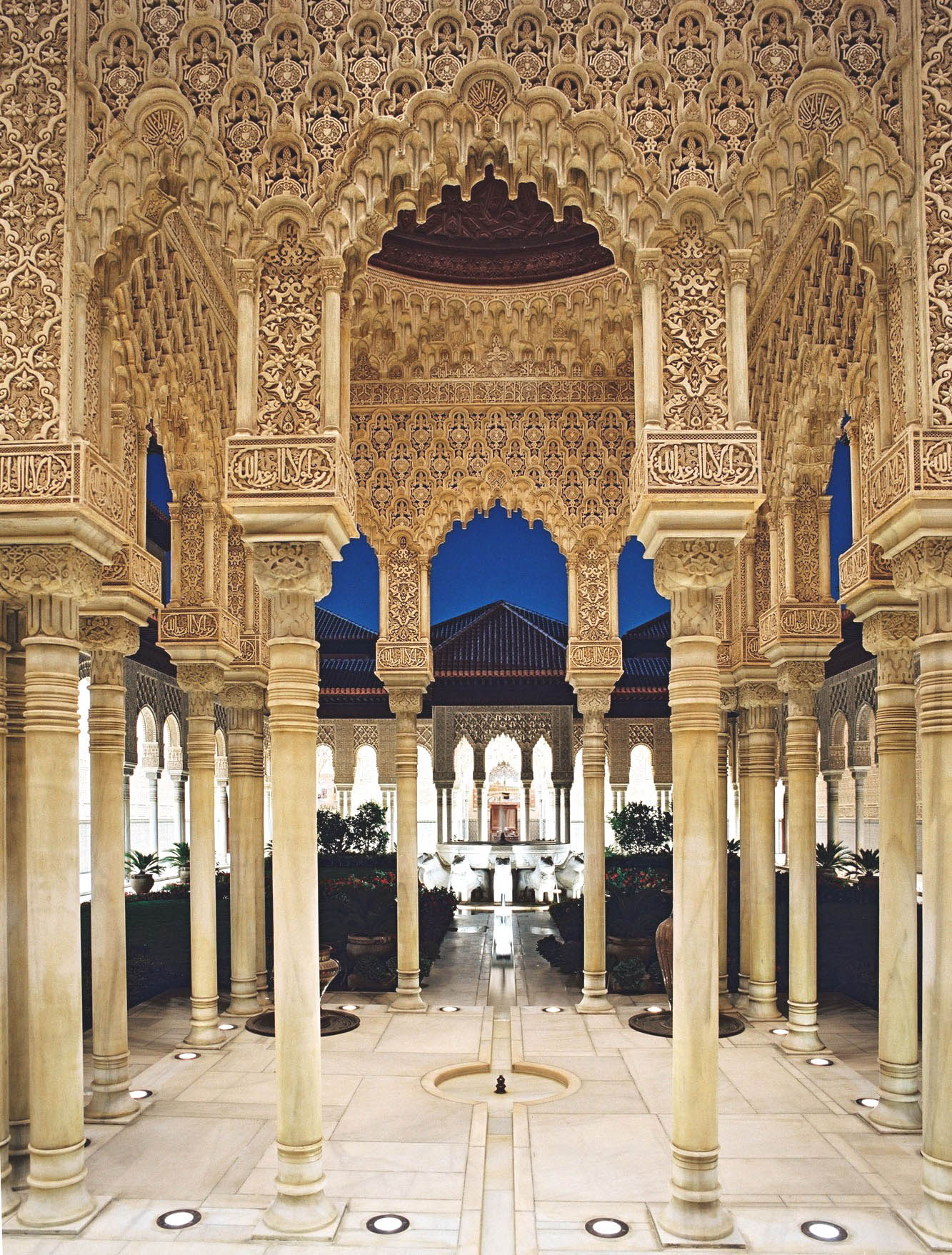
Hello Dear Readers. Just another quick post. The other week I found myself attending an event at the Brooklyn Museum for the first time in many years I hate to admit. Just beyond the lobby is a grand installation entitled "Connecting Cultures: A World in Brooklyn". The concept is part of a sweeping trend among Museums to get more artworks out of the storerooms and display them en mass not only to show off their holdings but also to make cross cultural connections. It was a display case of African and African inspired furniture that stopped me in my tracks.
 |
| "Connecting Cultures: A World in Brooklyn" installation Image: Brooklyn Museum |
As I rounded the case I knew at once I was seeing an art deco masterwork by the French designer Pierre Legrain.
 |
| Pierre Legrain Stool, Ca. 1923 Image: Brooklyn Museum |
The form is African in origin but is rendered in the materials of art deco luxury, namely lacquer and galuchat. Legrain works are exceeding rare as he died in 1929. It was for this reason I was keen to read the gallery text to find its provenance. Unfortunately there was no listed provenance beyond the credit line "Purchased with funds given by an anonymous donor". Fortunately the accession number "73.142" may provide some insight. You see, accession numbers are typically a combination of the year that the object is acquired and the number of the bequest/object donated in that year. The stool's number would suggest that it was acquired in 1973 which was was in close proximity to a major event in the nascent art deco market...that would be the groundbreaking sale of the collection of Jacques Doucet. For background on Doucet and his awe inspiring collection see my previous post
here.
 |
| Collection Jacques Doucet, Hotel Drouot, Paris 8 November 1972 Image via diktats.com |
The couturier Jacques Doucet died in 1929 and eventually the contents of his studio in Neuilly Sur Seine were placed in storage only to be rediscovered by his descendants decades later when the storage facility was closing down. The subsequent sale in November of 1972 is a subject of legend in the decorative arts community and pieces ended up in the best collections and museums across the globe. Unfortunately, I do not have a copy of the sale catalogue at my fingertips or else I would settle this mystery in mere moments...therefore, we are left to consult the period images of the studio.
 |
| View of Doucet's Studio at Neuilly-sur-Seine, circa 1930 Image: L'Illustration, No. 4845 |
In the image above a very similar stool to the one at the Brooklyn museum can be seen just to the left of the monumental Lalique door.
 |
| Detail of stool in Doucet's Studio Image: L'Illustration, No. 4845 |
The seat is of the same shape and proportion as is the rectangular stepped base, but the legs appear to be comprised of four posts and not faceted columns. Its also hard to tell if there is a cream central support. This lack of detail may be due to the period method of tinting these images or it may in-fact not be the same Legrain stool. Thankfully, the Centre Pompidou's catalogue for their recent Eileen Gray exhibition published another view of the Studio that I had never seen before.
 |
| Studio Jacques Doucet Neuilly-sur-Seine Image: Institut national d'histoire de l'art |
 |
| Detail of Legrain Stool in Doucet's Studio Image: Institut national d'histoire de l'art |
If the Brooklyn Museum's stool is from Doucet's fabled studio, this appears to be an image of it in-situ. It is of the same overall shape, possesses the central cream support, and you can make out the collars on the four faceted legs as they catch the light. I need to consult a copy of Doucet's sale to be sure, but if I were a gambling man I would suspect that this is indeed the example now in the collection of the Brooklyn Museum....I will provide updates as the truth emerges.
On a side note, the Metropolitan Museum of Art has an African inspired Legrain stool that was purchased from the 1972 Doucet sale. It was on view a few years back, but alas is now safely in storage.
 |
| Pierre Legrain carved rosewood stool for Jacques Doucet, ca. 1925 Image: Metmuseum.org |
This stool borrows its form from an African headrest but is of the proportion of a low stool. The sister to this stool was sold from the outstanding Dray Collection presented at Christie's Paris in 2006. It achieved the tidy sum of $660,066.
 |
| Pierre Legrain carved hardwood stool for Jeanne Tachard, Circa 1925. Image: Christie's |
The Christie's catalogue notes that while Legrain's works for his top clients were generally unique pieces it is believed that since Jacques Doucet and Jeanne Tachard were close friends some exceptions could be made. The Yves Saint Laurent sale at Christie's in 2009 yielded yet another rare stool by Legrain. This stool can be traced directly to Jacques Doucet as it was lot 43 in the 1972 sale of his collection.
 |
| Legrain carved hardwood stool for Jacques Doucet, ca. 1925 Image: Christie's |
I have always loved this particular example. It is overtly African in inspiration but the supports to me also skew into the arena of the machine age becoming stylized gears. Christie's sold this work for $589,130.
As a final aside, I am pleased that more period images of Doucet's collection are coming to light. As reader's of this blog know I love seeing works as they were presented in their original context. This recently published image is no exception as it clearly shows two "old friends" that I have marveled at for years.
 |
| Studio Jacques Doucet Neuilly-sur-Seine Image: Institut national d'histoire de l'art |
At the immediate left you can see two figures from Eileen Gray's screen "Le Destin". The work dates to 1914 and was one of the first Gray pieces that Doucet acquired. It resurfaced in his 1972 sale where it achieved $36,000. It presently resides in a private collection.
 |
| Doucet's Studio detail showing Gray's "Le Destin" Image: Institut national d'histoire de l'art |
 |
| Eileen Gray's "Le Destin" lacquered wood screen, ca. 1914 Image via marcbongaerts.nl |
Another work visible in the image of the studio is a bit hard to make-out but is well know today as it resides in the Musee des Arts Decoratifs, Paris.
 |
Detail of Doucet's Studio showing the Legrain side cabinet at the Musee des Arts Decoratifs
Image: Institut national d'histoire de l'art |
It is a bit hazy but if you know the work it becomes clear. I shot a few images of this piece when I was last in Paris.
 |
| Pierre Legrain & Gustave Miklos side cabinet, ca. 1923 Image: Aestheticus Rex |
 |
| Detail of the Gustav Miklos silvered and enameled panel. Image: Aestheticus Rex |
In the period photo you can just pick out the graphic nature of the stylized African panel by Gustave Miklos. It is all very exciting. I am trying to get my hands of a copy of the 1972 Doucet sale as we speak. Updates to follow. Until next time...--AR.
UPDATE:
Well in the days since penning this post I have discovered that a stool of the same exact model as the one at the Brooklyn Museum is in the possession of the Virginia Museum of Fine Arts.
 |
| Pierre Legrain Stool, ca. 1923 Image: © Virginia Museum of Fine Arts |
It is part of the Sidney and Frances Lewis bequest and the listed provenance is none other than Jacques Doucet. I am very curious to know if there was a pair made for Doucet, or if the example at the Brooklyn Museum was made for another client. I should have my hands on a copy of the Doucet sale in a few days...details to follow.
UPDATE II:
Well the mystery has been solved on two fronts. I was able to find a copy of the Doucet auction and there was only one stool of this design offered, lot 33. This would mean that Doucet's Legrain stool is definitely the example in the collection of the Virginia Museum of Fine Arts.
 |
| Jacques Doucet's Legrain stool, Hotel Drouot, Paris, 8 November 1972, lot 33 ($4300) |
The Brooklyn Museum also confirmed that theirs was indeed not from the Doucet sale but was actually acquired from an Italian collection and it was originally made for the de Crespi family with whom Legrain designed textiles. Examples of this collaboration were evidently shown at the 1925 Exposition in Paris and recall his work in luxury bookbinding.
 |
| Pierre Legrain textile designs for Benigno Crespi, ca. 1925 Image via Flickr |
Until next time.--AR




 Posts
Posts