Sunday, March 14, 2010

Liberty of London for Target Liberates Cash from Wallets


I have to say that like most anglophiles I was delighted to hear that Liberty of London was partnering with Target on an extensive line of clothing and lifestyle accessories. Well, the sellout and early closing of the NYC pop-up store last week was an early indication of how well the line would go over. For those not familiar, Liberty of London was founded in 1875 and offered exotic housewares and fashions that became essentials for the Aesthetic Movement crowd. Liberty's bold floral fabrics are iconic in the design world and have logically formed the centerpiece of the Target collection. I awoke on Sunday only to find that most of the collection had already sold out online. Not to be discouraged I rented a car and hit the burbs...I was not the only one to do so. It was a madhouse but after hitting two stores I felt sated in the knowledge that I had seen the collection and bought a few of the "must have" items.

The hoard above is comprised mostly of their stationary, giftware and clothing. I have to say that at these price points the quality is pretty fair. They did get it wrong with most of the bedding because the patterns are blown-up to near distortion and the thread counts are low enough to be rash inducing. That said their Lucite boxes, frames and stationary are very well done and would be a bargain at twice the price. I of course I had to compare some of the clothing with Liberty pieces I already possess...

Placed side by side these ties feel fairly similar in weight and texture. The print on the Target tie is a bit simplified and the finish lacks the sheen of its better cousin but overall I was pleasantly surprised. By the time I left both stores most of the shelves were picked clean and by mid-afternoon "Liberty for Target" items started popping up allover eBay at double and triple the retail price. That's life in the world of design...

Sunday, February 28, 2010

Mikiphone: Form Follows Function Without Apology

The other day I found myself comforting a good friend as his hard drive lay dying in that venerable computer hospital, Tekserve. I was a bit out of my element as I admittedly embrace the future while gazing fondly at the past. Scanning the room I felt drawn to the display of portable speaker systems available every configuration and hue. With the advent of mp3 technology entire "record" collections can now be carried in your pocket and the portable speaker systems allow music to be even more accessible to the masses. It seems that once a technology is perfected the struggle then becomes making it "smaller, better and faster." This of course has always been the case...

I present to you the Mikiphone, a Swiss product patented in 1924 as the "pocket phonograph." All of the components condense neatly into the round stainless steel case about the size of a large pocket watch (4 1/2 x 1 3/4 in.). It was the ipod of its day and was even lauded by modernist architect Le Corbusier for capturing the "essence of the esprit nouveau." His reaction is likely due to the fact that the Mikiphone was a modern refinement of the phonograph to its essential form with the utmost efficiency and honesty and not shrouded in the fripperies of a historicist cabinet. To see a Mikiphone in action click here.

You see, when phonographs were introduced in the late 19th century they resembled scientific instruments which were often an affront to the senses when placed within the domestic interior. Elsie De Wolfe herself had this to say on the matter in her decorating treatise The House in Good Taste (1913) "I prefer the good mechanical cabinet that offers us 'canned' music to the manual exercise of people who insist on playing wherever they see an open piano. Of course the mechanical instrument is new, and therefore, subject to much criticism from a decorative standpoint... I have a cabinet of 'canned' music that can be turned on for small dances when need be, and that can be hidden in a closet between times. Why not?" Well this prevailing attitude led phonograph manufacturers to form art departments whose sole task was to cloak phonographs in every period style known to man. The results are sometimes comical as seen in in the period literature and examples below.


This sort of blind historicism for sake of decoration would surely have given Ruskin a fit but it makes me laugh on some level. As if Abelard and Heloise fired up their 'Gothic' phonograph in the midst of a romantic moment, funny, but preposterous nonetheless. I'd take the Mikiphone over a faux Louis XV chinoiserie model any day...good design never needs to apologize for itself.

Thursday, February 25, 2010

Proto-Modern Marvel

While distracting myself from the tasks at hand, I decided to review Wright's March Design Sale. Considering the economy, it is a fairly solid showing of 20th century design staples but nothing really sets the the world on fire in my opinion. It is of course a "mid-season sale", and like Christie's and Sotheby's, this sort of sale tends to be less earth-shattering and more about clearing previously unsold property and lower-profile consignments. That said it is a great way to get deals on standards while you wait for the more "important" (ahem) sales. I was however delighted to see this lovely little toast/letter rack by Christopher Dresser.

This piece is inserted right in the middle of the art deco section of the sale despite the fact that this design surprisingly dates to 1878. Dresser was a well versed exponent of the revival styles of the Victorian age but was capable of being forward-looking to which his metalwork designs can attest.
While the forms flirt with Japonisme, they are distinctly anthropomorphic and futuristic owing to the fact that he embraced industrialization. The tureen and claret jug have always seemed to be capable of lift-off while the footed vessels appear to be waiting for the lights to dim so they can make a quick escape. It is hard to believe we are looking at designs from the 1870s-80s. These works were conceived nearly a half a century before their time. The toast rack at Wright's is priced at $1000-1500 which seems a bit high as it is a silver-plated brass example. Electroplated examples tend to sell in the $600-800 range while the solid silver examples tend to go in the mid to high 1000s as seen in a recent example sold at Christie's South Kensington. We will have to wait and see how this beauty performs...
UPDATE: Well the auction came and went and I feel vindicated in my assessment. The lot reached around $700 ($938 with buyer's premeium) which is where a plated example should fall...

Some things don't change, thankfully

To beat the winter blues as we stand on the precipice of yet another snowstorm I spent some time perusing images of my last trip to Paris. Among the mood elevating gems was this image of an upholsterer's shop in the fabric district of Montmartre.

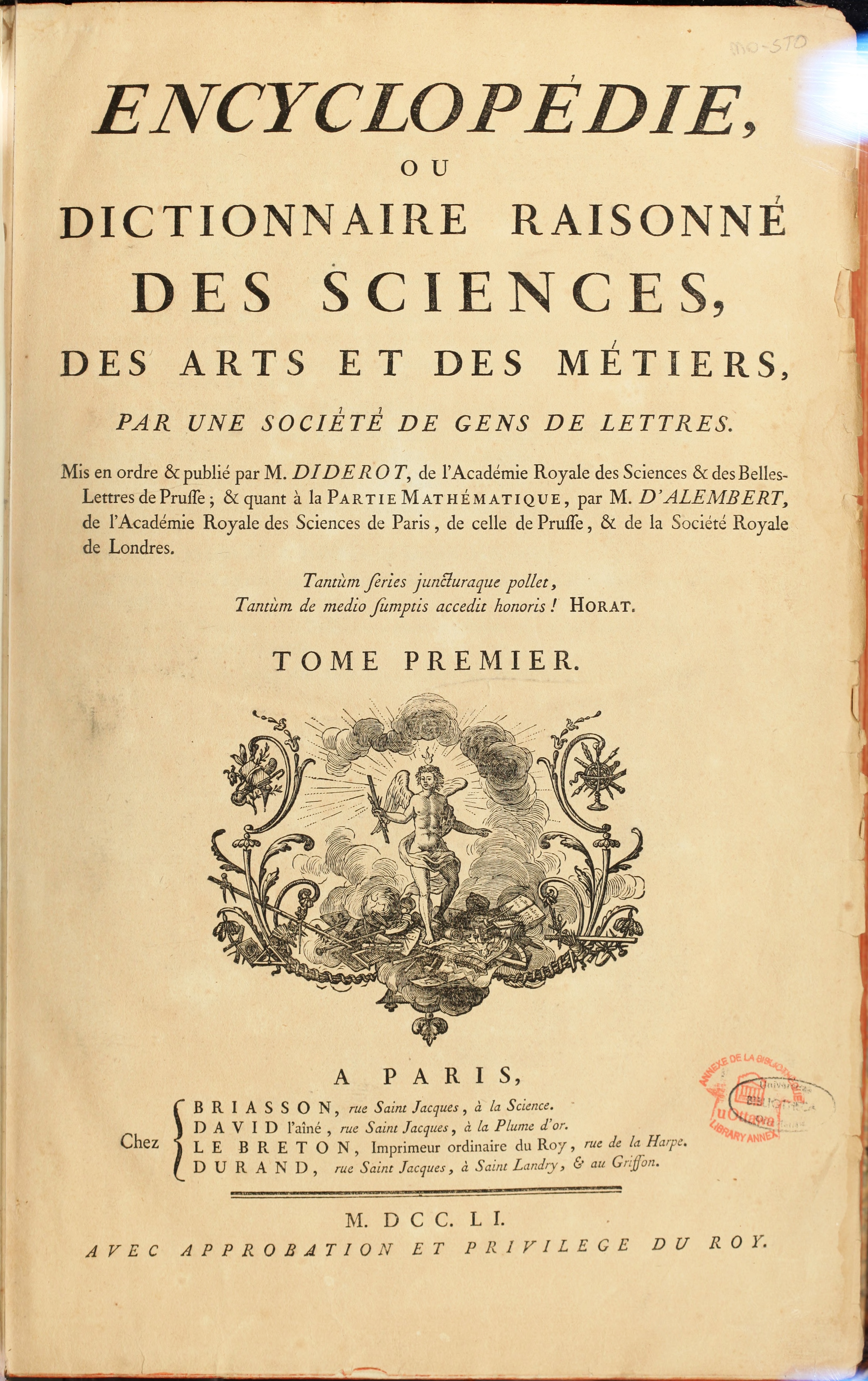
The dangling restauration style armchairs seemed odd to my shopping companions but they immediately shot my mind back to images from Denis Diderot's famous Encyclopedie. Diderot, for those not in the know, was a great Enlightenment thinker who produced an encyclopedia documenting the arts, sciences and trades of 18th century France. It is a visual feast and I highly recommend it.

This is Diderot's view of a typical upholstery workshop where one could select from numerous styles of finished and unfinished works. Note the suspended chair frames...

It may seem odd to our 20th century eyes, but thankfully this is far from mass production and dare I say it...Ikea.

Tuesday, February 23, 2010

Pebble + Window = Broken? Not always so...

On a recent escape from the gray winter doldrums I found myself in Winter Park, Florida. Being in the "art biz" I had been told for ages to take in the extensive Tiffany Glass collection at the Charles Hosmer Morse Museum and I am very glad that I finally made the trek. Around every corner were "old friends", Tiffany works that I had seen published many times over the years not always noting where they were located. To call the collection encyclopedic barely does it justice. One of the many works that stopped me in my tracks was an extremely rare "pebble" window executed by Tiffany studios in the 1890s.

The window itself was executed for the house of Joseph Briggs in Jersey City, New Jersey. Briggs was one of Louis C. Tiffany's most trusted workman and is the person who is often credited with these obscure glass and pebble confections. The crystalline pebbles of the border and the central clusters are arranged and graded in such a way as to make the semi-precious stones transcend into almost jewel-like qualities. In the past these rare pebble works were considered more of a curiosity, an eccentric offshoot of Tiffany's core business. However, very recently serious Tiffany collectors have snapped-up a related window and an orientalist dream of a table lamp both of which were sold through Sotheby's.

This detail from the Briggs window shows the subtle grading and tonality of the stone selection. This was no small feat and was achieved through the craftsman's adept skill and slight-of-hand as the tiniest "pebbles" forming the center are actually rendered in faceted-glass effortlessly blended into a cohesive composition. This blend of faceted-glass and pebble work is seen most closely in the Sotheby's lamp noted above. While the result does not suit all tastes the survival of these decorative oddities stand as a testament to Tiffany's genius.

Thursday, February 11, 2010

God Save McQueen!


I like many was stunned today to hear of the passing of fashion superstar Alexander McQueen... apparently by his own hand. Many thoughts swirled through my mind in terms of his vision and what will now become his legacy... There has always been a dispute regarding what is high art, decorative art and (gasp) fashion, but at the end of the day art is transformative, changing how we see ourselves and the world. To distill it into an object I would look back to McQueen's shoes from last season...

This particular pair moves somewhere between beauty and the macabre. Sleek and bejeweled while sinister, transforming the model into a towering clawed glamazon. The result is akin to folly but brings a feeling of sheer delight. Naysayers will find fault with anything but also fail to embrace fashion's long ties to surrealism. Enter Elsa Schiaparelli and her infamous shoe hat and lobster dress.

In terms of "high art" (ahem) the correlation I make is to the glass high-heel appendages Matthew Barney had crafted for Aimee Mullins for his Cremaster Cycle. Mullins who herself modelled for McQueen, FYI. Barney's appendages create an air of power and modernity, transforming Mullins into a futuristic superwoman.

If I had to venture a guess we will see retrospectives of McQueen's work at the Met or the V&A within the foreseeable future. We shall leave it to the curators to to draw the deeper comparisons about McQueen's oeuvre, until then we will feel the void.

Monday, February 8, 2010

Ipad a familiar form...


Although I have an affinity for all that is old and hand crafted I am by no means a Luddite. I like many others waited with baited breath for the launch of Apple's new tablet device. I was not let down by its sleek design and modern capabilities. However, the image showing the pad as a convenient travelling lap desk shot my mind back to the travel luxuries of the past. Case in point, the well appointed travel desk which was a modern luxury and marvel of its time.

This early Victorian example in burr chestnut and satinwood does not fail to please the senses and while slower than modern email it allowed the user to keep up with correspondence while on the go. This desk in itself is a sophisticated "device" with compartments for all the implements of writing including a secret compartment....the antique equivalent of the "password protected document."